

AllegroGraph: Champion in Bloor Research Graph Database Report
“AllegroGraph is the highest ranked product in its class, and, thanks to Gruff, it was rated as the easiest product to use.” – Bloor Research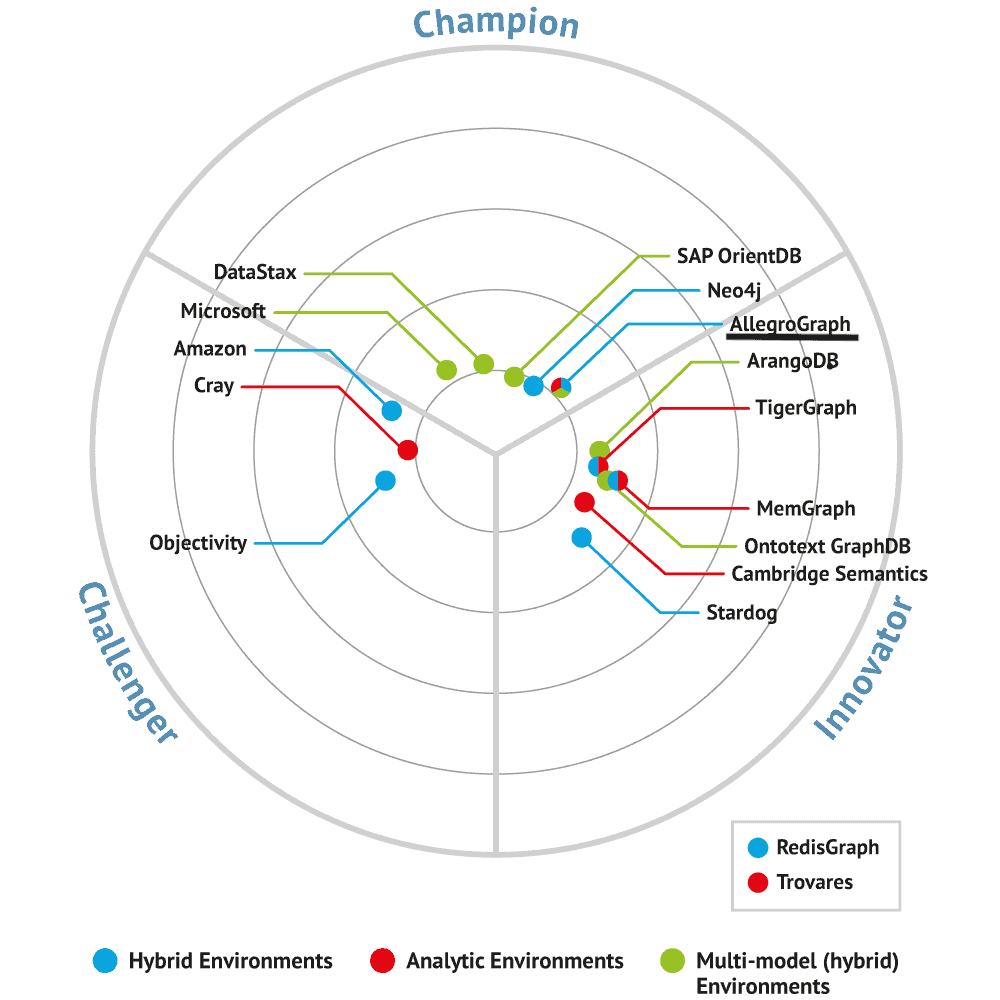
AllegroGraph was positioned as a Champion in the Bloor Research Graph Database report, updated December 13, 2019. The report specifically rated AllegroGraph as the highest ranked product in its class and the easiest to use, highlighting Gruff as a key differentiator for developing graph queries. Bloor Research further described AllegroGraph as a highly secure, semantic graph database with extensive features including AI, machine learning, and natural language processing capabilities.
AllegroGraph is positioned as a Champion in the Bloor Research Graph Database report, which describes AllegroGraph as a “highly secure, semantic graph database that includes a wealth of features, including distributed deployment and querying, multi-modal ingestion, multi-master replication, AI and machine learning, and natural language processing.” (Source: Bloor Research, Graph Databases, Updated December 13, 2019)
The Bloor Research report explains that AllegroGraph also “functions as a document store with content search and full document retrieval capabilities. It automatically links structured RDF data to information within documents based on semantic concepts, allowing users to perform graph analytics across linked data within databases, document stores and CSV files. It supports property graphs and integrates with a wide variety of data science tools.”
Strengths
- Gruff is a major differentiator. It provides by far the easiest way of developing graph queries that we have seen from any vendor. The company also partners with graph visualization vendors such as Linkurious.
- The analytic support provided is extensive and Franz is one of relatively few vendors that is serious about complex analytics. The nDimensional support is also a differentiator.
- We particularly like the semantic data lake concept as well as the ability to associate probabilities with relationships.
How can I read the full Bloor Graph Report review?
You can read the full Bloor Graph Report review by clicking the image provided. This will open the larger PDF file for detailed insights into AllegroGraph's capabilities.
