

- 2 April, 2026



IET – Understanding the Autonomous Electric Vehicle Cyber Threat Landscape
Autonomous electric vehicles are not just cars with batteries and sensors. They are complex cyber-physical systems that connect vehicles, charging stations, communications networks, AI models, energy infrastructure, and the electric grid. That complexity creates a new security challenge: risk is no longer isolated inside a single component. It propagates across systems.
A recent research article, “Understanding the Autonomous Electric Vehicle Cyber Threat Landscape: A Focus on Infrastructure, Threats and Ontology-Based Modelling,” highlights this challenge directly. The authors argue that autonomous electric vehicles combine the attack surfaces of electric vehicles, autonomous driving systems, advanced driver assistance systems, charging infrastructure, vehicle communications, and grid connectivity. Threats can include sensor impersonation, AI manipulation, network vulnerabilities, remote access attacks, charging protocol risks, and attacks that may affect not only vehicle performance but also energy consumption and grid stability.
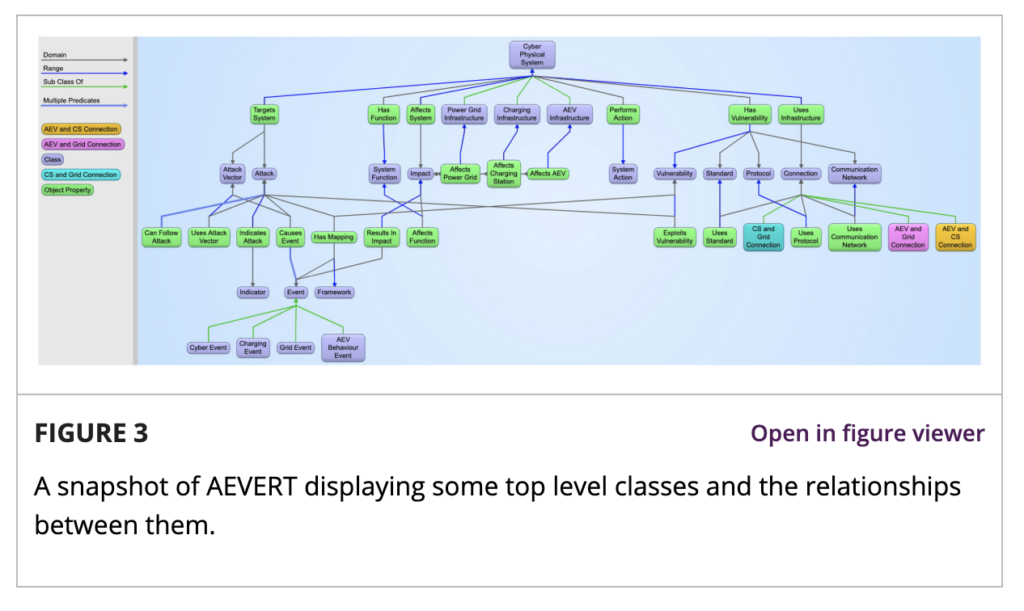
The most important insight from the article is not simply that autonomous electric vehicles face many threats. It is that these threats are interconnected. A vulnerability in a charging station, a communication channel, a vehicle control system, or an AI decision component may become part of a larger attack path. Static spreadsheets, flat taxonomies, and disconnected threat lists are not enough to model this kind of risk.
Related articles

AllegroGraph 9.1 Introduces GraphTalker 2.0: Building Persistent Enterprise Memory for AI Agents
- By Franz Inc.
- October 16, 2026

Forrester Defines the Context Layer: Building the Living Context Graph for Agentic AI
- By Franz Inc.
- September 11, 2026