
- 3 April, 2026



Gartner Is Sending a Clear Signal: Semantics are Essential in the AI Enterprise Infrastructure
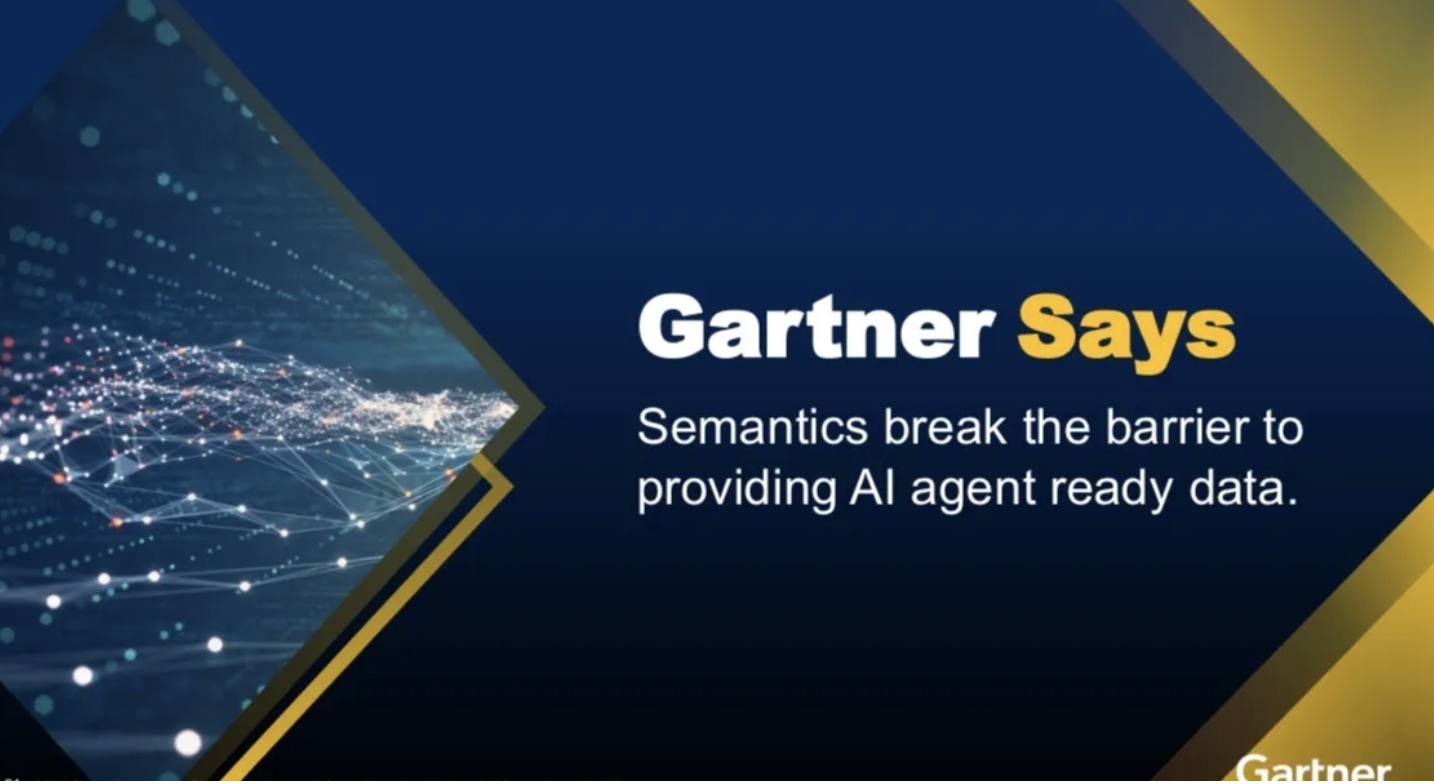
Juan Sequeda recently highlighted several important takeaways from Gartner Data & Analytics 2026, and the market message is hard to miss: semantics have moved from optional to essential.
That matters for everyone building enterprise AI, analytics, data products, and agentic systems. And it is especially relevant to why platforms like AllegroGraph are becoming more important.
According to the Gartner material Juan shared, universal semantic layers will be critical infrastructure.

Enterprises know they need better context, better meaning, and better structure for AI and analytics. They also know their current foundations are not strong enough.
Semantics are no longer a side topic
The market is now recognizing a simple truth: AI cannot deliver reliable enterprise value if it does not understand enterprise meaning. The budget for Semantic Capabilities is Non-Negotiable.
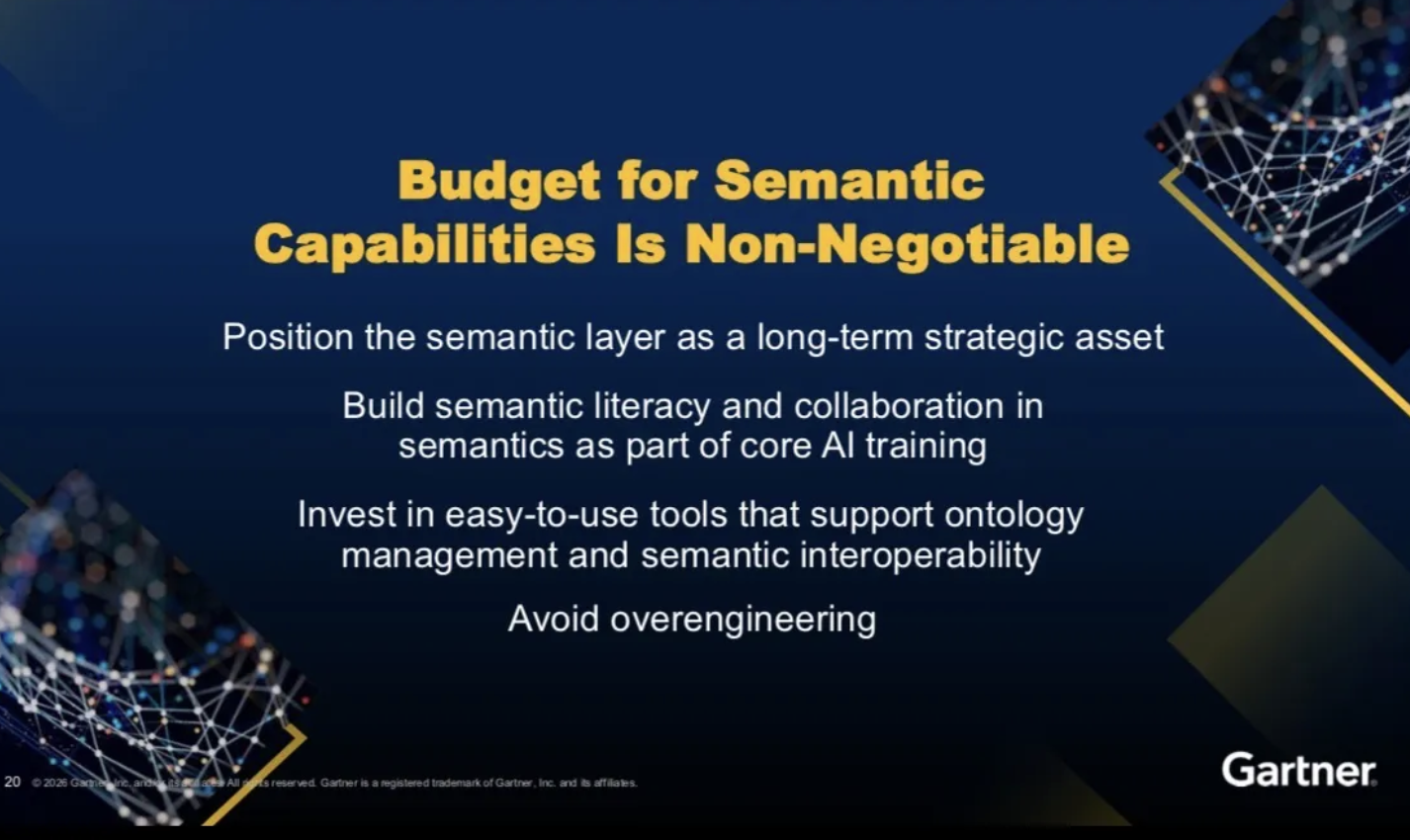
That means organizations need a way to define concepts consistently across systems, connect data that lives in different formats and silos, and give AI and analytics tools access to context that reflects how the business actually works.
A semantic layer helps translate technical data into business meaning. It gives organizations a way to standardize language, align definitions, and create a more usable data foundation.
Why this matters for AllegroGraph
The Gartner signal is important because it validates the direction that knowledge graph technology has been pointing toward for years and is consistent with Gartner’s previous direction to start building Knowledge Graph. Image – Gartner 2024 presentation.
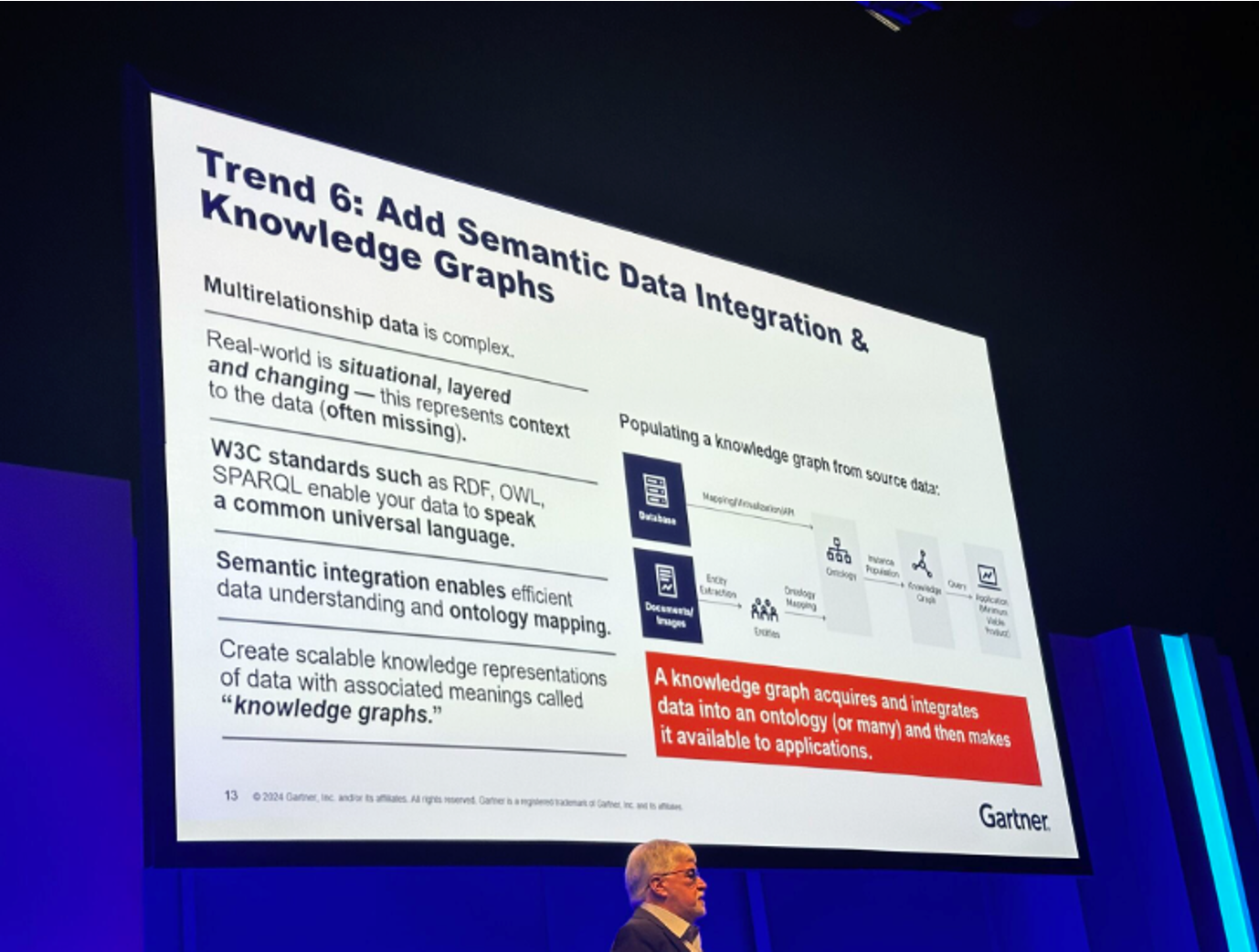
If semantics are becoming strategic, the next question is obvious: what kind of semantic foundation should enterprises build?
The answer should not be another silo (cough, Neo4j). It should not be another proprietary abstraction layer that locks meaning inside a single vendor stack (cough, cough AtScale).
The real power comes from a semantic layer built on a standards-based semantic knowledge graph.
AllegroGraph provides a knowledge graph foundation for building semantic layers that are open, interoperable, and durable. It supports explicit modeling of enterprise meaning across systems and domains using standards-based technologies, so the semantic layer becomes a strategic enterprise asset rather than another isolated product feature.
AI agents make this even more important
Another key reason Gartner’s message matters is the rise of AI agents.
Agents need more than access to raw data. They need context. They need definitions. They need relationships. They need guardrails. They need a shared understanding of what customers, products, policies, events, and processes actually mean.
Without that, agentic systems may sound intelligent, but they will not be dependable.
This is why semantic infrastructure is becoming so important. It is not just about better metadata. It is about making enterprise data usable for AI systems that must act, reason, and explain.
A standards-based semantic layer built on a knowledge graph gives agents a durable semantic foundation instead of forcing them to infer meaning from fragmented systems and inconsistent labels.
Standards matter
Another important takeaway from the Gartner direction highlighted by Juan is that the market is not just asking for more semantics. It is asking for semantics that can scale across the enterprise.
That raises a critical issue: interoperability.
If companies build semantic assets in proprietary silos, they risk creating a new generation of lock-in. If they build a semantic layer on a standards-based semantic knowledge graph, they create a foundation that can be reused across tools, teams, and AI systems.
That is one reason AllegroGraph’s support for RDF, OWL, and SPARQL matters so much. These are not academic extras. They are part of what allows enterprises to build semantic infrastructure that is portable, extensible, and durable.
Gartner’s message is market validation
The big takeaway here is not just that semantics are interesting. It is that Gartner is signaling they are an essential part of modern enterprise data and AI strategy.
That is powerful market validation.
- It validates the idea that meaning must be modeled, not assumed.
- It validates the need for context-rich enterprise data.
- It validates the importance of governance and explainability.
- And it validates the value of building semantic layers on a standards-based semantic knowledge graph foundation.
For AllegroGraph, this is exactly the point.
As enterprises start building serious AI systems, they will need more than models and vector search. They will need a semantic foundation that can connect knowledge, govern meaning, support reasoning, and ground intelligent systems in real enterprise context.
That foundation should not become another silo. It should not create new proprietary lock-in. It should be open, standards-based, and built to last.
That is what AllegroGraph enables.
And that is why this Gartner signal matters.
Related articles
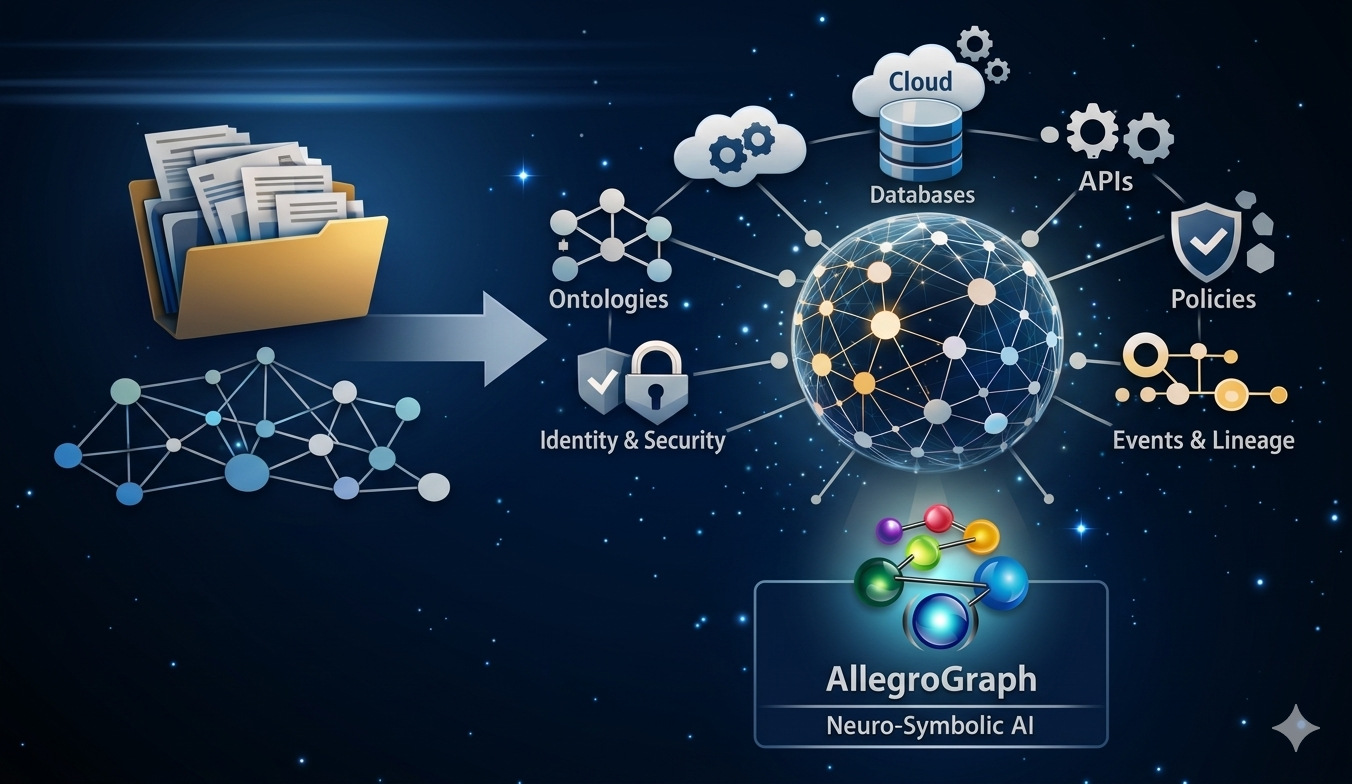
Beyond Graphify: Why the Enterprise Needs More Than a Folder-to-Graph Tool
- By Franz Inc.
- April 10, 2026